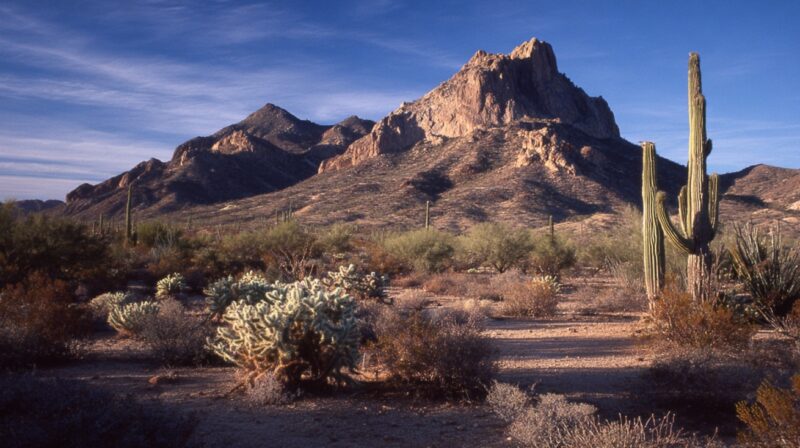
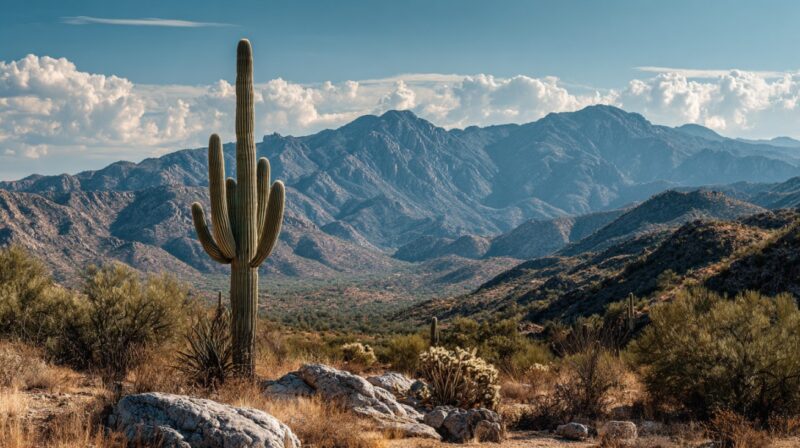
Saguaro cactus, Carnegiea gigantea, rises as one of the most recognizable plants in North America. Native only to the Sonoran Desert in southern Arizona and northern Mexico, it grows taller than most desert vegetation and can dominate open desert plains.
Extraordinary longevity defines this species. Many saguaros live 150 to more than 200 years.
Such a lifespan allows a single plant to witness centuries of seasonal change, drought cycles, and shifting climate patterns while slowly progressing through clearly defined life stages.
Let us talk about it in greater detail.
Key Adaptations for Desert Survival
Survival in intense heat requires a coordinated set of structural and physiological traits. Saguaro cactus integrates water storage, metabolic timing, and protective features to endure extreme aridity.
Water Storage and Physiological Strategies
Pleated stems act as expandable reservoirs. After heavy rainfall, tissues swell noticeably as water accumulates in internal cells. During an extended drought, stored moisture sustains basic metabolic processes.
Photosynthesis follows a specialized pattern known as crassulacean acid metabolism.
- Stomata open at night when temperatures are lower
- Carbon dioxide is stored temporarily in acid form
- Daytime photosynthesis proceeds while stomata remain closed
Nighttime gas exchange reduces water loss and improves survival during prolonged heat.
Root System
Root systems spread widely but remain close to the surface. Rapid response to rainfall is critical in arid soil. Within hours of a storm, shallow roots absorb moisture before evaporation removes it.
Wide lateral spread also anchors tall stems against strong desert winds. Stability becomes increasingly important as height and weight increase over the decades.
View this post on Instagram
Structural Defenses
Spines provide multiple protective functions. Dense clusters deter herbivores and cast small shadows across the stem surface, lowering skin temperature.
Waxy outer skin reduces transpiration and shields inner tissues against intense solar radiation. Protective layers limit water loss and help prevent sun damage during prolonged heat events.
Longevity and Lifespan Dynamics
Exceptional lifespan defines saguaro biology. Individuals commonly live 150 to more than 200 years. Time required to reach full height and maximum reproductive capacity may span many decades.
Growth rates vary widely depending on rainfall patterns and temperature trends. In especially dry regions, arm development may be delayed far past 100 years.
- Slow metabolic rate that conserves energy
- Efficient water storage and regulated gas exchange
- Durable internal tissues, such as medulla cells, that remain functional for extended periods
An extended lifespan allows saguaros to persist through cycles of drought and relative abundance. Population stability depends on occasional periods favorable for seedling establishment.
Life Stages
@desertprowl Documenting this bad boy. Saguaros don’t even grow arms until around 50-70 years. This one is approximately 80-120 years old or much older. What do you think? *Its* #Arizona #desertlife #saguaro #cactus #PlantTok ♬ Villains of Circumstance – Queens of the Stone Age
Saguaro life unfolds slowly across many decades. Reproductive success depends on surviving early hazards and eventually reaching maturity in a climate that can change dramatically over time.
Seed Production and Germination
Reproduction begins with prolific seed output. Saguaro fruit contains thousands of tiny black seeds embedded in bright red pulp. Over a lifetime, a mature cactus may produce up to 40 million seeds. Massive production compensates for extremely low survival rates.
Despite extraordinary numbers, only a minute fraction reaches adulthood. Germination requires precise conditions: moist soil, moderate temperatures, and partial shade.
Seed dispersal relies heavily on wildlife.
- Birds that consume fruit and deposit seeds across wide areas
- Mammals that carry pulp away and scatter seeds through droppings
Seeds that land in exposed soil often desiccate quickly. Intense heat can kill seedlings within days. Sudden cold snaps during winter also eliminate many young plants. Mortality remains highest during the first year of life.
Nurse Plants and Early Growth
Protection during early years often determines survival. Most successful seedlings establish under nurse plants such as palo verde, creosote bush, or mesquite. Shade reduces surface temperatures and shields delicate tissue against direct sun.
- Lower daytime soil temperatures
- Reduced frost exposure during cold nights
- Physical concealment that limits herbivore damage
Growth during early years proceeds at an almost imperceptible pace. Seedlings may grow only 1 to 1.5 inches over the first 8 to 10 years. Energy allocation favors root expansion and internal tissue strengthening rather than visible height increase.
Shallow soils and limited rainfall demand conservative water use. Small size during early decades reduces water requirements and limits exposure to extreme heat.
Maturation and Reproduction
Gradual vertical growth eventually lifts the cactus above surrounding shrubs. Flower production usually begins around 35 years of age, marking the start of reproductive maturity.
Arm development occurs much later. Branches typically appear between 60 and 100 years, influenced by moisture availability and growing conditions. Wetter decades often accelerate arm formation, while prolonged drought delays it.
Flowering follows a distinct pattern. White blossoms open at night in sequence around the crown. Night blooming aligns with bat activity, while early morning hours bring visits by bees and birds. Pollination depends on coordinated timing between plant and animal activity cycles.
Successful pollination leads to fruit production in early summer. Sweet pulp attracts wildlife and initiates another cycle of seed dispersal across desert terrain.
Full Growth
Long lived individuals can exceed 40 to 50 feet in height and weigh several tons after absorbing large volumes of rainwater. Pleated stems expand dramatically following heavy storms.
Multiple arms increase reproductive potential. Each arm produces additional flowers, which expand total seed output across a lifetime.
Long lifespan combined with high seed production compensates for severe early mortality. Rare favorable decades with consistent rainfall may produce noticeable increases in seedling establishment. Patience across centuries allows population persistence even when recruitment remains low for many years.
Sonoran Desert Habitat and Environmental Context
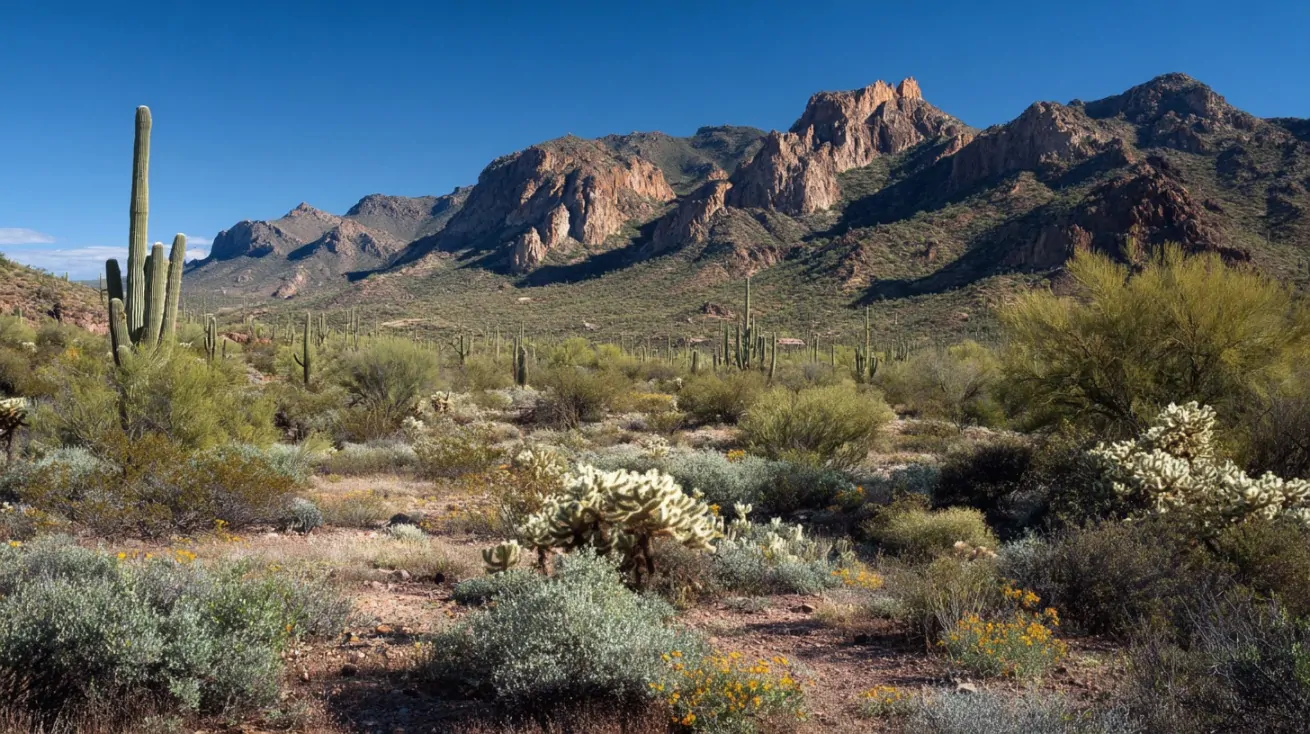
Survival in the Sonoran Desert depends on endurance, timing, and efficient resource use.
Saguaro cactus developed its slow growth pattern in response to heat, drought, and seasonal unpredictability. Every phase of its life cycle connects directly to temperature trends and rainfall cycles.
Sonoran Desert conditions shape every aspect of saguaro biology. Summer temperatures often rise above 110 degrees Fahrenheit, placing intense thermal stress on exposed tissues. Surface temperatures on sunlit stems can climb even higher.
Winter nights occasionally approach freezing, creating a risk of cold damage, especially for young plants. Day-to-night temperature swings can exceed 30 degrees Fahrenheit within a single 24-hour period.
Annual precipitation remains low, typically ranging between 3 and 15 inches depending on location and elevation. Rainfall does not fall evenly throughout the year.
- Gentle winter storms that deliver steady, soaking rain and recharge soil moisture at moderate temperatures
- Intense summer monsoons that produce short bursts of heavy rain, lightning, and localized flooding
Winter rainfall supports root health and early spring metabolic activity. Summer monsoons trigger rapid water uptake through shallow roots and allow pleated stems to expand as internal tissues store moisture.
Flower production and fruit development depend on sufficient rainfall in preceding months. Weak winter precipitation or delayed monsoon arrival can reduce bloom numbers and limit seed formation.
Pressures on Saguaro Populations
Environmental stressors have intensified in recent decades. Recruitment of young plants has declined in several monitored areas, raising concern about long-term population trends.
Climate Change and Extreme Weather
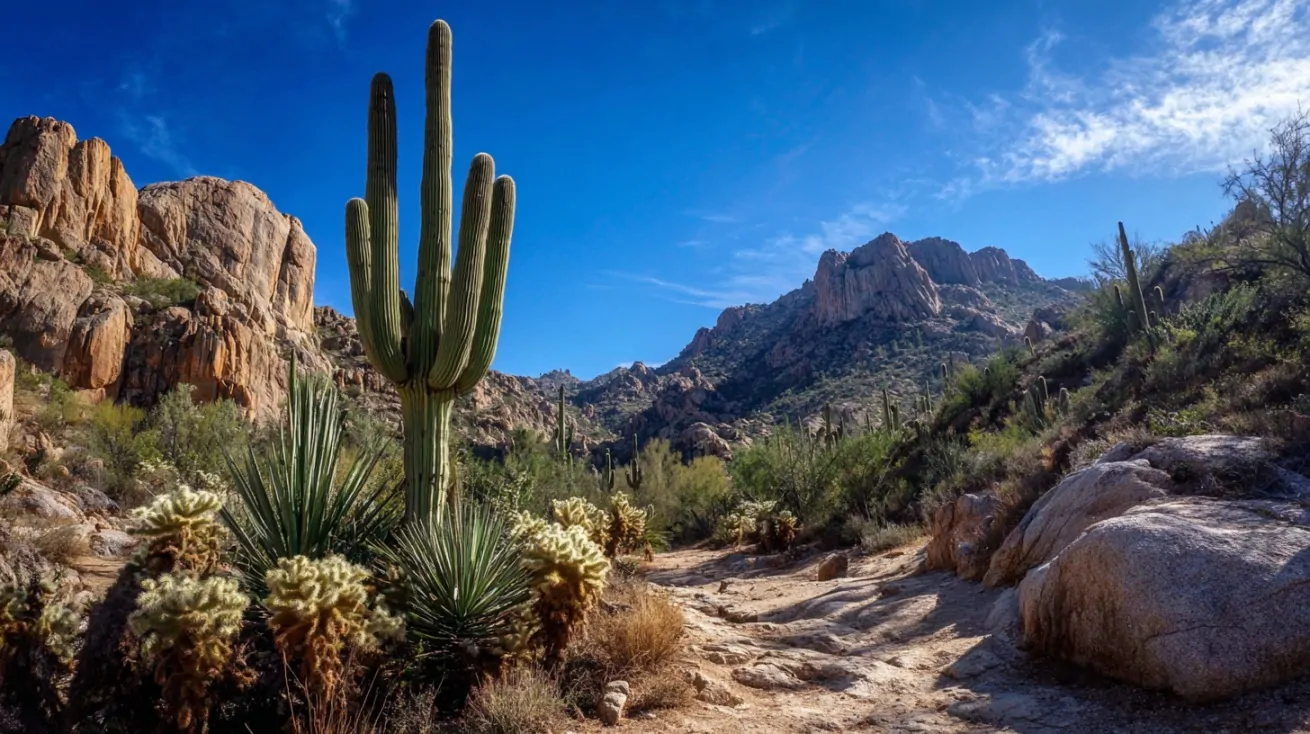
Increasing heatwaves and prolonged drought reduce the survival of seedlings and juveniles. Data collected in parts of Saguaro National Park show sharp declines in recruitment since the 1990s, associated with reduced precipitation and higher temperatures.
- Loss of arms after extreme heat
- Toppling due to weakened root anchorage in dry soil
- Surface burns following intense heat or wildfire exposure
Even large individuals face elevated mortality risk during consecutive years of extreme conditions.
Fires and Invasive Species
Fire frequency has increased in some regions due to invasive grasses such as buffelgrass. Dense grass growth creates continuous fuel that carries flames across desert areas historically resistant to fire.
Saguaros lack structural adaptations to survive repeated burning. High heat damages internal water storage tissue and can lead to delayed collapse months after exposure. Rising fire activity adds further pressure to populations already stressed by drought and heat.
Scientific and Conservation Efforts
Long-term research provides essential data on growth rates, mortality, and recruitment trends. Park biologists and trained volunteers conduct repeated censuses over decades, counting individuals and documenting seedling emergence.
- Age structure distribution within study plots
- Annual survival rates of seedlings
- Frequency of arm development in mature plants
Research into microhabitats reveals that rocky slopes and specific soil conditions may support improved survival for young saguaros.
Slight differences in elevation, shading, and soil depth can influence moisture retention and temperature moderation.
Conservation planning uses these findings to identify areas where regeneration remains possible.
Careful habitat management and continued monitoring will shape efforts to support saguaro populations in a warming desert climate.
The Bottom Line
The saguaro cactus demonstrates how plant life can persist in extreme desert climates for centuries.
Slow growth, specialized physiology, and massive seed production enable survival under intense heat and limited rainfall.
Current climate pressures, extended drought, and increased fire risk pose serious challenges. Long-term survival will depend on the successful recruitment of new plants and careful stewardship of desert ecosystems.