Few animals carry a reputation as intense as the honey badger. Stories and viral clips portray it as an unstoppable force, charging at lions, fighting off snakes, and shrugging off pain.
Popular culture often paints it as nature’s most fearless creature, an animal that simply does not care about danger.
Reputation, however, is not the same as biological reality. Careful observation reveals a far more complex animal. Honey badgers possess remarkable physical tools and bold behavior, yet they are not reckless thrill seekers.
Clear separation of myth and fact reveals how their image formed and why it persists.
What Makes Honey Badgers So Tough
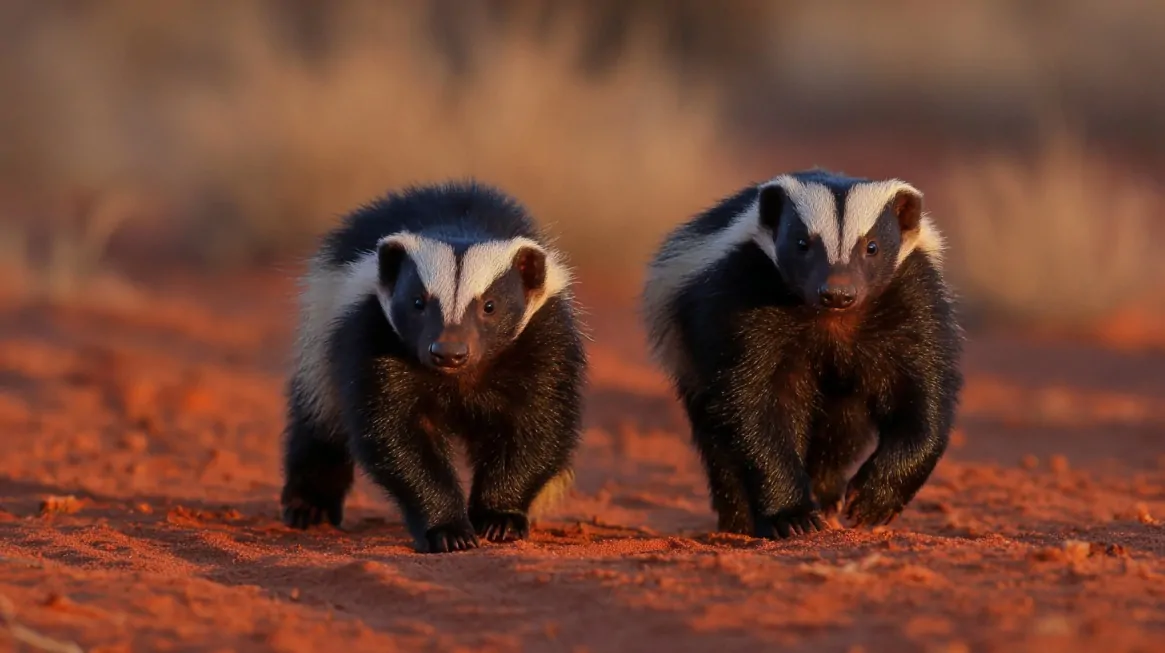
Reputation for toughness rests on concrete biological traits and consistent behavioral patterns. Physical structure and mental flexibility combine to create an animal that can endure punishment and still function effectively.
Strength alone does not explain their survival. Design of the body and patterns of decision making work together in critical moments.
Physical Adaptations
Bites aimed at the neck often fail to secure a firm hold due to loose skin.
Extraordinary skin provides one of their greatest advantages. Hide is thick and difficult to penetrate, especially around the neck and shoulders, where predators often target bites.
View this post on Instagram
Loose attachment of skin to underlying tissue allows the animal to twist within a predator’s grip and counterattack. Even when seized, a honey badger can rotate enough to bite back.
- Bites aimed at the neck often fail to secure a firm hold due to loose skin.
- Bee stings penetrate, yet thickness reduces depth and limits damage.
- Porcupine quills can lodge in the hide, but many do not reach vital organs.
- Injury still occurs, yet structural defenses reduce the chance of fatal wounds during brief but violent encounters.
Powerful forelimbs and long, curved claws give honey badgers impressive digging and defensive ability. Muscular shoulders generate force for tearing into hard ground. Burrows can be excavated rapidly for shelter, resting sites, or sudden escape routes. Underground refuge often determines survival during pursuit.
Claws function as weapons as well. During confrontations, forelimbs swipe at faces and sensitive areas.
View this post on Instagram
A combination of strength and speed can discourage predators that expect minimal resistance. Even large carnivores must consider the cost of engaging an animal capable of inflicting painful injuries.
Pain tolerance and partial venom resistance add another layer to their durability. Encounters with venomous snakes sometimes result in temporary paralysis or slowed movement. Recovery can occur hours later, allowing the badger to resume activity. Repeated observations of survival after snake bites contribute heavily to their reputation.
Resilience also appears during raids on beehives. Thick skin and tolerance to stings allow access to honey and larvae that many mammals avoid.
Recovery does not mean immunity. Severe bites or heavy venom loads can still prove fatal. Survival odds, however, increase compared to many animals of similar size.
Behavioral Traits
Physical tools alone do not account for success. Conduct in tense situations reveals calculated tenacity rather than blind aggression. Defensive displays often precede physical contact. Growling, raised fur, and sudden charges communicate readiness to fight.
A predator faced with an opponent that appears unpredictable and willing to retaliate may reconsider the attack. Many confrontations end without prolonged combat because intimidation works.
Problem-solving ability strengthens their position in challenging environments. Captive honey badgers have demonstrated tool use and coordinated escape efforts.
A well-known individual named Stofel repeatedly escaped enclosures by stacking logs, rocks, or other objects to climb walls. He manipulated gates and learned patterns in caretaker routines.
Omnivorous feeding habits further enhance adaptability. Diet includes insects, bee larvae, reptiles, rodents, eggs, and plant matter. The ability to exploit many food sources reduces dependence on a single prey type. Seasonal shifts in availability do not easily threaten survival because alternatives exist.
Misconceptions About Honey Badgers
Popular narratives often reduce honey badgers to caricatures of constant aggression. Reality presents a more balanced animal that weighs risk and reward.
Bold posture does not equal absence of fear. Risk evaluation shapes many decisions. Retreat into burrows offers safety during serious threats. Avoidance of unnecessary conflict conserves energy and reduces injury risk.
- Use of underground dens to escape predators.
- Movement during times that lower encounter rates with large carnivores.
- Abandonment of food sources when danger escalates.
Aggression appears when options narrow or when offspring require protection. Caution remains present even in animals known for audacity. Apparent bravado in viral clips hides quieter periods of patience and withdrawal.
Larger predators can and do kill honey badgers, especially young or injured individuals. Lions, leopards, and hyenas possess size and strength advantages that can overwhelm even a tough opponent. Mortality risk increases when surprise or exhaustion limits defensive response.
Confrontations usually relate to food or defense rather than entertainment. Honey badgers do not seek fights for amusement. Behavior centers on opportunity and protection. Energy expenditure during combat carries a cost, so unnecessary battles make little biological sense.
The Myth of Fearlessness

Public image of the honey badger grew rapidly during the age of online video. Dramatic confrontations captured on camera shaped a powerful narrative of unstoppable defiance.
Clips showing badgers charging lions or attacking venomous snakes circulated widely. Guinness World Records once referred to the honey badger as the “most fearless animal,” strengthening that label in popular imagination. Short videos often focus on peak intensity moments, creating an impression of constant combat.
Scientific observation provides a more measured perspective. Honey badgers assess threats and choose actions carefully. Retreat, hiding, and avoidance occur regularly in natural settings. Aggression appears when escape routes close or when food and offspring require defense.
Behavior that appears reckless in isolation often represents calculated survival.
Cultural storytelling amplifies extreme examples while ignoring ordinary routines. Dramatic encounters circulate widely, while quiet foraging and rest remain unseen. Image of absolute fearlessness owes much to selective footage rather than typical daily behavior.
Defensive Reputation
A combination of thick skin, strong claws, venom tolerance, and bold displays produces a formidable adversary.
Even a large carnivore risks facial wounds or damaged eyes during a struggle. Injury can compromise future hunting success, so risk calculation favors caution.
Predators often weigh potential reward against possible harm.
- Small body size offering limited meat compared to the effort required.
- High probability of retaliatory bites and scratches.
- Reputation built through previous painful encounters.
The decision to disengage can benefit both animals. Honey badger avoids a fatal attack, while the predator avoids injury that could threaten survival.
Unpredictable reactions also foster caution. Sudden charges and loud vocalizations may surprise animals expecting easy prey. Over time, repeated experiences reinforce a collective wariness.
Honey Badgers and Humans
View this post on Instagram
Human encounters with honey badgers tend to be limited and situational. Popular fear often exceeds actual risk.
Aggression toward humans remains rare and typically occurs during the defense of young or self-protection. Most interactions involve avoidance. Human presence often leads to retreat into cover rather than direct attack.
Conflict emerges when food resources intersect with human activity. Raids on beehives or poultry can create tension in rural communities. Strong claws and persistence enable access to secured enclosures.
Curiosity may characterize some encounters, yet caution dominates behavior. Perception of relentless hostility does not match routine conduct around people. Respect for their capabilities, combined with proper livestock protection, reduces conflict significantly.
Summary
Careful review of biology and behavior reveals a powerful yet pragmatic animal.
Thick skin, strong claws, venom tolerance, intelligence, and dietary flexibility contribute to survival. Situational boldness, not literal fearlessness, defines their character.
Public perception often exaggerates constant aggression. Reality shows a creature that balances risk and reward with remarkable skill.
Respect for honey badgers rests on genuine adaptation and resilience rather than myth alone.