
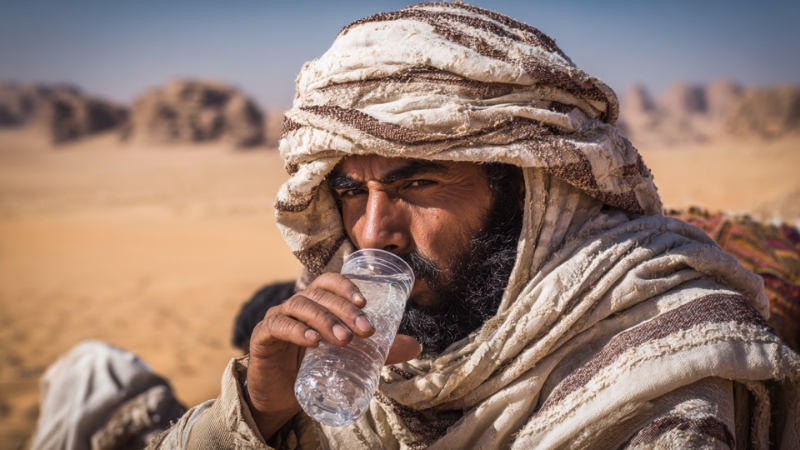
Hydrating like a Bedouin means prioritizing water conservation, safe storage, and source knowledge over constant drinking, while modern desert filtration prioritizes pathogen removal and chemical reduction through engineered systems.
Traditional Bedouin practices reduce water loss and manage risk through behavior and materials, whereas modern filtration delivers microbiologically safer water when sources are contaminated.
The practical answer is that survival-grade hydration in the desert comes from combining Bedouin strategies that minimize need with modern filtration that maximizes safety.
Desert Hydration Is a Management Problem, Not a Thirst Problem
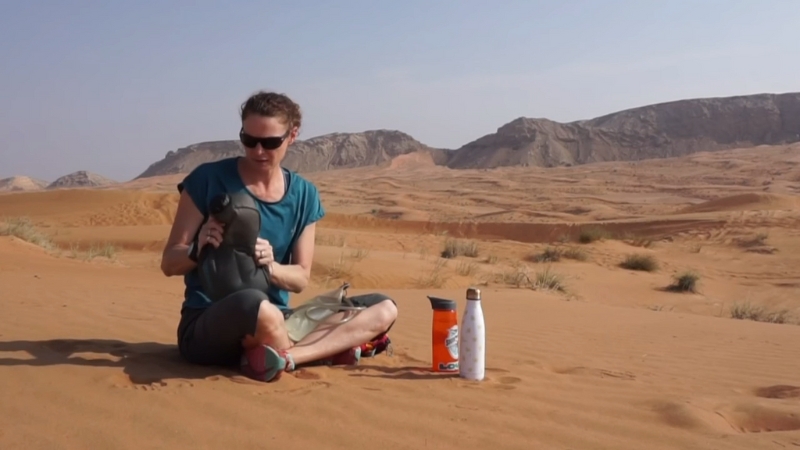
In hot arid environments, dehydration risk rises primarily from sweat loss and respiration, not from a lack of access alone. Field physiology data show that at air temperatures above 35°C, an adult can lose 1 to 1.5 liters of fluid per hour during steady movement.
Bedouin groups historically managed this by traveling at night or dawn, resting at midday, wearing loose, layered garments that reduce evaporative loss, and pacing intake rather than chasing thirst. These behaviors reduced total daily water demand.
Modern travelers often reverse the equation by moving faster, sweating more, and relying on frequent drinking, which increases total water requirement and filtration load.
Traditional Bedouin Water Sources and Risk Tolerance
Bedouin water sourcing relied on seasonal wells, shallow hand-dug pits, cisterns, dew collection, and occasional surface pools after rain.
These sources were not sterile. The risk profile accepted was primarily microbial rather than chemical, and exposure was moderated by low consumption volumes and intermittent use.
Ethnographic surveys from the Arabian Peninsula describe water with high turbidity and mineral content consumed without treatment, with illness risk managed by source selection and avoidance of stagnant pools.
Mortality from waterborne disease existed, but was comparatively lower than the mortality risk from overexertion and dehydration.
The decision framework prioritized certainty of access and energy conservation over purity.
Storage as Filtration: Goat Skins, Evaporation, and Time

Traditional water skins made from goat or sheep hide performed multiple functions. The porous collagen structure allowed slow evaporation, cooling the contents by several degrees Celsius in dry air.
Lower water temperature reduces voluntary intake rate and slows gastric emptying, indirectly extending supply.
Sediments settled during storage, clarifying water without mechanical filtration.
While this did not remove pathogens, it reduced the particulate load that can shelter microbes. Laboratory analysis of evaporative cooling shows temperature reductions of 5–10°C under desert humidity levels below 30 percent, which is consistent with historical observations.
Behavioral Hydration Controls
The Bedouin hydration strategy emphasized mouth rinsing, small sips, and delayed drinking until rest periods.
Modern sports science confirms that frequent small sips can reduce perceived thirst without increasing sweat rate, while overhydration during exertion increases urine output and electrolyte imbalance.
Sodium retention was supported by salted foods, dried meats, and milk products, reducing hyponatremia risk.
This mirrors current endurance guidelines that emphasize electrolyte balance rather than plain water volume alone.
Modern Filtration Technologies in Desert Contexts
Modern desert hydration relies on portable filtration and purification systems designed to remove bacteria, protozoa, viruses, and sometimes dissolved chemicals. The effectiveness varies by technology and by water chemistry.
Mechanical microfilters with pore sizes of 0.1–0.2 microns reliably remove bacteria and protozoa such as Giardia and Cryptosporidium. They do not remove viruses, which require chemical disinfection or UV treatment.
Chemical tablets using chlorine dioxide are effective against viruses but require long contact times in cold or turbid water. UV purifiers deactivate pathogens but depend on battery power and clear water.
Reverse osmosis systems remove salts and heavy metals, but are energy-intensive and impractical for foot travel.
Water Chemistry Matters More in Deserts
Desert water often contains high total dissolved solids. In parts of the Arabian and Saharan regions, groundwater salinity regularly exceeds 2,000 mg/L. Drinking such water increases osmotic load and urine output, negating hydration benefits.
Traditional knowledge identified “sweet” wells with lower salinity, often linked to deeper aquifers or specific geological strata. Modern filtration without desalination does not solve this problem. Only reverse osmosis or distillation removes dissolved salts. This is a critical limitation of most portable filters.
Comparative Performance: Traditional vs. Modern
The table below summarizes how each approach performs across critical desert hydration factors.
Dimension
Bedouin Traditional Practices
Modern Filtration Systems
Water safety
Relies on source knowledge and risk tolerance
High pathogen removal when used correctly
Salt removal
Source selection only
Only RO or distillation is effective
Energy demand
Minimal
Moderate to high, depending on the system
Failure points
Drought, misjudged wells
Clogged filters, dead batteries
Water consumption rate
Low due to behavior
Often higher due to exertion
Longevity
Centuries of field validation
Decades of technological testing
Health Outcomes and Evidence
Modern epidemiological data from arid regions show that dehydration remains a leading cause of heat-related illness among travelers and military personnel, despite access to treated water.
A U.S. Army review of desert operations between 2003 and 2011 found dehydration and heat illness incidence rates exceeding 15 cases per 1,000 personnel per month during summer deployments.
This suggests that water purity alone does not prevent hydration failure. Traditional pacing and exposure management directly address the root causes of fluid loss.
Integrating Both Systems in Practice
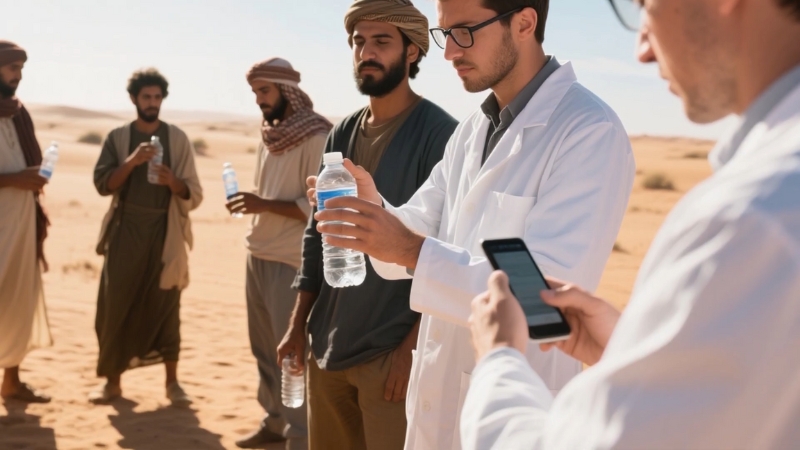
The most resilient desert hydration strategy combines Bedouin behavioral controls with selective modern treatment.
Using filtration to address microbial risk while adopting traditional movement timing, clothing, and intake discipline reduces total water needs and system stress. In practice, this means filtering less water overall, carrying fewer consumables, and lowering failure risk.
This hybrid approach aligns with current recommendations from organizations such as the World Health Organization, which emphasize water safety planning alongside demand management rather than treatment alone.
Modern Misconceptions About “Clean” Water
A common modern error is equating clarity with safety and safety with hydration adequacy. Clear water can be saline or chemically contaminated.
Treated water can still be consumed too fast or in the wrong conditions. Traditional desert cultures understood hydration as a system that included shelter, movement, clothing, and food.
Filtration was never the central pillar. Modern technology corrects specific risks but does not replace systemic control.
Case Comparison: Sahara vs. Arabian Desert Practices
View this post on Instagram
In the Sahara, Tuareg groups favored deeper wells and camel milk supplementation, reducing reliance on marginal water sources.
In the Arabian Peninsula, Bedouin tribes mapped seasonal wells with oral cartography passed through generations.
Both systems minimized unknown water use.
Modern desert travelers often lack this contextual map and compensate with technology, which works only within its design limits.
Bottom Line
Hydrating like a Bedouin does not mean rejecting modern filtration. It means recognizing that desert hydration success depends more on reducing water loss and choosing sources wisely than on treating large volumes of water.
Modern filtration excels at pathogen control but does not address salinity, exertion, or behavioral drivers of dehydration.
The most reliable desert hydration system is behavioral discipline grounded in traditional knowledge, supported by modern filtration as a targeted tool rather than a primary strategy.